
Mila has been an incredibly engaged and helpful recruiter. She was with me every step of the way by helping me prepare for interviews, giving me all the essential details about the hiring company, being flexible as to when to schedule our calls even with my long working hours, and communicating with companies on my behalf. I am now working in an incredible workplace all thanks to her initiative to reach out to me.
Blog
-
The Right Time to Hire an In-House Lawyer for a B2B Tech Company
Many tech businesses start by relying on external lawyers to handle their legal legal needs, but at a certain point, hiring an in-house lawyer becomes not just beneficial, but essential.
Why timing matters in hiring first in-house counsel
In-house lawyers are more than legal troubleshooters; they are strategic partners who can guide a company through complex challenges and support business goals.
Unlike external lawyers, an in-house lawyer develops a much a deeper understanding of the business, which allows them to make proactive legal decisions, anticipate risks, and support company’s growth in a streamlined way.
So, hiring too early can strain resources, but waiting too long can open your business to avoidable risks and increased costs. Finding the right timing is a matter of balancing these factors.
Key milestones indicating the need for an in-house lawyer
Several signals point to the need for dedicated, internal legal support:
- Operational Growth and Rising Complexity
As your company scales, so does the complexity of its legal landscape. This might include an uptick in vendor and partner agreements, customer contracts, and internal policies.
Companies often find that when contract management begins to consume significant time from other departments, or when managing external legal services becomes cumbersome, it’s time to consider bringing in a legal professional internally. - Expansion into Regulated Markets
If your business is moving into new geographic regions or sectors with strict regulatory demands (e.g., data privacy laws like GDPR), the need for real-time legal guidance grows.
An in-house lawyer will monitor compliance requirements across jurisdictions, helping to prevent costly missteps before they happen. - Data Privacy and compliance needs
For tech companies dealing with substantial amounts of client data, staying compliant with data protection laws becomes critical.
This is especially true for companies in SaaS, cloud, or data-driven fields. An in-house lawyer familiar with privacy regulations will establish a compliance program, advise on data use, and act as an internal go-to resource for privacy-related queries. - Contract volume reaches a tipping point
B2B tech companies often handle numerous contracts with clients, partners, and vendors. When negotiating, drafting, and reviewing these agreements becomes time-consuming and costly, an in-house lawyer can streamline the process, introduce efficiencies, and mitigate risks associated with each contract.
Risks of delaying the hire
Waiting too long to bring an in-house lawyer on board can expose your business to significant risks:
- Increased Legal Exposure and Liability
Without an in-house lawyer’s immediate guidance, your company may become vulnerable to legal claims, missed deadlines, or regulatory violations.
These risks increase when business decisions are made without a clear understanding of the legal landscape. - Missed Strategic Opportunities
An in-house lawyer can offer valuable input on business decisions, such as partnerships, pricing models, or compliance-related product changes.
Relying solely on external counsel usually limits this strategic perspective, as external lawyers typically lack the depth of insight into the nuances of your business. - Rising Legal Costs
Over time, heavy reliance on external counsel can become prohibitively expensive.
Engaging an in-house lawyer allows your company to keep certain processes internal and manage legal needs more flexibly, which will lead to long-term cost savings.
In-house lawyer vs. outside counsel: When to make the shift
While external counsel is often the right choice for occasional legal needs or niche expertise, at a certain point, hiring in-house becomes more efficient. Here’s how to evaluate that tipping point:
- Cost-Benefit Analysis
Hiring an in-house lawyer may involve a significant salary investment, but it can ultimately reduce reliance on outside lawyers for routine matters.
Studies indicate that mid-sized companies can save up to 30% annually on legal fees by bringing legal talent in-house. Calculate your current legal spend and compare it to the cost of hiring; if legal fees are a consistent overhead, the shift makes financial sense. - Need for Industry-Specific Knowledge
B2B tech companies face unique legal challenges around IP, software licensing, and data protection.
An in-house lawyer familiar with these areas can respond faster and with more nuanced advice than an external lawyer who may need to get up to speed on industry specifics.
Top considerations before making the hire
Moving to in-house counsel isn’t simply about filling a role; it requires careful planning and alignment with company goals. Here’s what to consider:
- Define the Scope of the Role
For many companies, the first in-house lawyer is often a generalist who can handle a variety of legal tasks, from contract negotiation to IP management and compliance.
Define what your business most needs right now, whether that’s help with contracts, privacy, or IP, and prioritize those tasks in the role description. - Budget and resources
Alongside the salary of an in-house lawyer, consider resources like legal technology and external support for specialised needs.
Modern legal tools for contract management, compliance tracking, and document storage can greatly enhance efficiency and support your new hire’s work. - Identifying the right legal expertise
Every B2B tech company will have different needs. Determine whether you need someone with strong commercial contracting experience, deep knowledge of IP law, or skills in regulatory compliance.
Finding a lawyer who aligns with these priorities is crucial to getting value from the role.
Benefits of hiring an in-house lawyer early
An in-house lawyer brings unique advantages that go beyond cost savings:
- Strategic involvement in business decisions
An in-house lawyer who understands your business can actively contribute to key decisions.
For example, they can advise on product launches with an eye on compliance, help structure deals with potential partners, and create policies to protect IP—all while aligning with the company’s strategic goals. - Improved risk management
A dedicated in-house lawyer can identify legal risks early and implement measures to mitigate them. By proactively managing risks, your company can avoid costly legal issues that could disrupt operations or impact reputation. - Faster, more efficient contract review and negotiation
Having a lawyer on staff enables quicker turnarounds on contract negotiations and review, which can improve client satisfaction and streamline business operations. No more waiting for external lawyers to respond during critical deal negotiations.
Building an In-House Legal Function: First Steps
Making the transition from external to in-house legal support requires some planning. Here’s how to lay the groundwork for a successful in-house legal function:
- Creating the Right Role: Generalist vs. Specialist
Decide whether you need a legal generalist who can cover a range of issues or a specialist with deep expertise in one area. For most first hires, a generalist approach is ideal, as they can adapt to the company’s evolving needs. - Prioritising Legal Needs
Clarify which legal areas need the most attention. This might include establishing compliance programs, handling high-priority contracts, or managing IP assets. By setting these priorities, your new hire can focus their efforts on the areas that will bring the greatest value to the company. - Onboarding Your First In-House Lawyer
Integrating a legal professional into a tech-driven culture may require educating teams on the value of legal input. Set the tone for legal as a collaborative partner, not an obstacle, to ensure the lawyer can engage meaningfully across departments.
As you prepare to bring legal expertise in-house, finding the right fit for your team is key.
An in-house lawyer adds strategic value by providing proactive guidance and aligning with your company’s growth goals.
But for many tech companies hiring a lawyer for the first time, identifying the right candidate can be challenging.
At Found Legal, we specialise in helping tech companies hire their in-house lawyers, bringing deep expertise in matching tech businesses with legal talent that suits their unique needs.
Trusted by tech scale-ups and multinationals in the Fortune 100, we understand how to align legal skills with business objectives.
If you’re ready to explore your first in-house legal hire, we’d be delighted to help you find the perfect fit to support your journey ahead: reach out to our director Mila Read for an introductory chat.
- Operational Growth and Rising Complexity
-
Is your LinkedIn profile Headhunter ready? Take this test to find out
Headhunters look for people with your skills on LinkedIn every day. Are you showing in their searches? Is your LinkedIn profile optimised for your to get noticed for the right opportunity?
Answer these questions to find out.
1. Are you connected to at least 500 people?
Yes
No
Answer: Aim for 500+ high quality connections to build an effective network. LinkedIn’s algorithm favours users with a larger network, increasing your visibility to employers and recruiters.
2. Are you connected to at least 20 relevant recruiters?
Yes
No
Answer: When a recruiter runs a search on LinkedIn, their direct 1st connections with the right keywords in their profiles will show at the top of the search. You may be the best fir for the role, but if you are not connected to that recruiter, your spot at the top is taken by someone else who is more proactive about their career management.
3. Is your LinkedIn profile photo recent and professional?
Taken in the last two years vs 2010
Is a professional headshot of you vs ‘me and my mate’
Don’t have one
Answer: An experiment tracking recruiters’ eye movements showed that they spend a disproportionate amount of time looking at candidates’ photos. LinkedIn reports that profiles with photos receive 21 times more views and 36 times more messages. A professional headshot is paramount. Use a high-quality, high-resolution photo with a plain background. Just ask a friend or your partner to take 20-30 well-lit shots with a smartphone and select the best one. Your face should occupy ca. 80% of the frame: not too distant and not too close.
4. Is your LinkedIn profile optimised for keywords?
Yes
No
What do you mean?
Answer: Keywords are simply words that headhunters are most likely to use to find someone with your profile. From the recruiting point of view, LinkedIn is just catalogue / database and operates very much like Amazon or eBay where you start with typing in the name of the product you are interested in. If you profile is organically populated with the right keywords, you will be appearing at the top of recruiters searches.
5. Have you worked on your headline?
Yes
No
What do you mean?
Answer: Your headline is what goes under your picture. Your current job title is what appears against the logo of your current employer. Both are important as they are searchable by headhunters. But your headline is what visitors to your profile see first and it’s what people see when you comment, post or report content on LinkedIn. Your headline gets way more exposure.
Customise your headline with relevant keywords, job titles, special credentials and your industry.
6. Have you optimised the first 2 lines of your “About” section?
Yes
No
Answer: LinkedIn only shows the first 2 lines of your About section. The reader then has the choice to click on ‘Read more…” — or not. Make sure that the first 2 lines position you for the jobs you are after, then it’s more likely that the recruiter will read the rest.
7. Do you list job titles and cy recommendations have you received?
10+
7-9
5-6
1-3
None
Answer: Aim for 6+ recommendations, with at least one written in the last year. Recommendations is the best way for an employer to ‘meet’ you as a person and not just another suited LinkedIn photo. They provide social proof to potential employers and indicate ongoing professional success and relevance.
8. Does every job record list the employer’s logo?
Yes
No
Answer: This is important for two reasons. Firstly, it shows that you are tech savvy enough to link a job with a LinkedIn company page. Secondly, headhunters actually run LinkedIn searches by current and past companies, especially for for C-level roles. If you don’t have your employers’ logos on your profile, it means that your profile is not ‘linked’ to those companies and you will not show in the headhunters’ search.
9. Does your Skills section include the skills for your target role?
Yes
No
Answer: Keep updating your skills. If you are a CEO, it’s time to remove Word and Excel from your skills list. Do include any foreign languages as a skill. In their special LinkedIn search interface, recruiters are able to search by specific skills. If you have the right skills on your profile, you will show in their search as someone suitable for the role they are working on.
10. How many recommendations have you received?
10+
7-9
5-6
1-3
None
Answer: Aim for 6+ recommendations, with at least one written in the last year. Recommendations is the best way for an employer to ‘meet’ you as a person and not just another suited LinkedIn photo. They provide social proof to potential employers and indicate ongoing professional success and relevance.
11. Do you post on LinkedIn?
Yes
No
Answer: Posting 1-2 times per week significantly improves your visibility on LinkedIn and keeps front of mind for your network. When headhunters search for candidates on LinkedIn, active profiles come up at the top of the search results.
12. Do you comment on other people’s posts on LinkedIn?
Yes
No
Answer: Commenting on other people’s posts (not just ‘liking’ them) is a highly valuable activity: your profile gets seen by the network of the author, you add another piece to the mosaic of your online brand, and you can turn your most popular comments into independent posts.
13. Have you set LinkedIn job alerts filters correctly?
Yes
No
Answer: Very few people take the time to tweak job search alerts to the point where they deliver truly relevant opportunities. The good news is, you only need to set them up once, and they will serve you for a good couples of years.
14. Have you customised your LinkedIn feed for the people you want to network with?
Yes
No
What do you mean?
Answer: If you are not careful, LinkedIn’s generic feed becomes a spam folder. You can set up activity notifications to create your own feed of content from people you’d like to interact with. Why is it important? So you can easily scan your feed for the posts that give you a chance to add a meaningful comment.
Sounds like a lot of work? It does not need to be. Just use this test as a checklist to make the most of LinkedIn, keep chipping away for a few minutes every day and you’ll be in top 1% of LinkedIn users most visible to headhunters.
-
How a CV Template May be Hindering Your Job Search
Both in my work as a recruiter and a career coach I often come across CVs that are built on a basis of a template.
Here are some examples from a popular CV templates website:
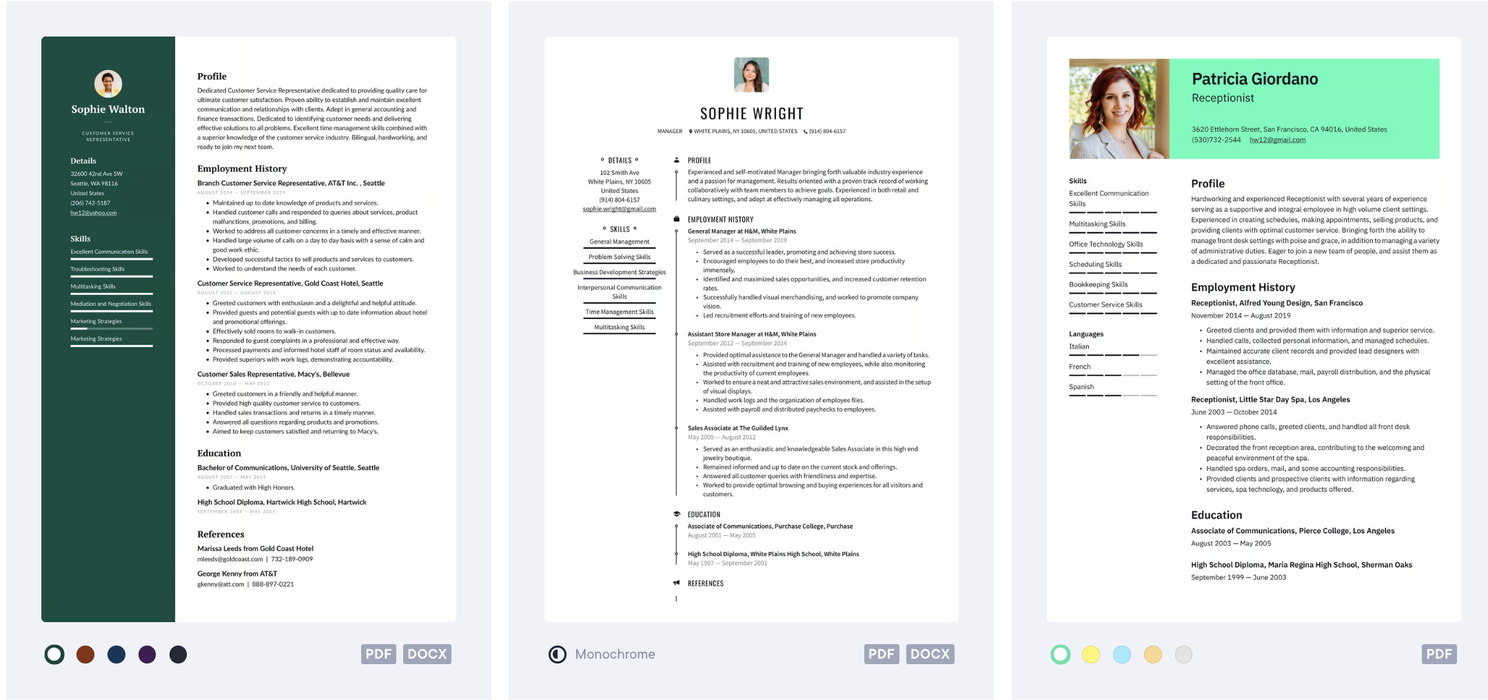
Most people don’t realise that a templated CV like this may seriously hinder their job search and prevent them from getting interviews for roles they are perfectly qualified for.
What’s wrong with these?
They are pretty. They are neat. Everything is one page. They are skimmable.
And this is where lies the problem:
❌ Aesthetics over substance
Templated CVs look appealing but they detract from the content of your resume.
The design dictates the content, forcing you to fit your information into predefined fields and page limits (often just 1 page).
There is no way you can tell your career story and engage your potential new boss’s attention.
The wrong reason most CV templates exist
Most of CV templates found on the Internet are self serving. There are businesses built on using CV templates as a lead magnet.
A lead magnet is a marketing term for a freebie that draws you to a website where you are presented with paid products or services.
So most online CV templates are designed to benefit the website creators financially rather than to help you secure employment. The prettier they are, the more visitors they get. Needless to say these CV templates never get tested in real recruitment environments.
Lack of flexibility
The main drawback of templated CVs is their rigidity. They are often limited in length and do not let you easily to tweak the content to suit different job applications.
This inflexibility can prevent you from highlighting the aspects of your experience most relevant to a particular role (which may take more space than the whole CV template).
Poor readability with column layout
Many templates force you to present information in two (or more) columns: the main one for your experience, and a narrower one for everything else.
When there is a competing column on the side, it disrupts the reading flow forcing the reader to re-focus on the neighbouring text.
Since hiring managers spend only 3-6 seconds deciding whether to delve deeper into a CV, a confusing layout may lead to your application being overlooked.
✔️ What you can do instead
Start with a blank slate
Begin your CV on a clean, empty document. This approach allows you to freely express what you want to say about your professional journey and then format it attractively without being constrained by a template.
Prioritise content flow
Design your CV to guide the reader smoothly from top to bottom, highlighting your achievements and skills in a coherent, easy-to-follow manner. Use clear subheadings a good amount of white space.
Don’t obsess over CV length, two to three pages depending on seniority is totally fine (yes, even in the US or France).
Customise for the job you are applying for
Without the restrictions of a template, you can tailor your CV to each job application: rewrite the summary, bulk up your relevance experience, add or remove skills.
In my practice as a recruiter, many of my candidates got the jobs because we’d invested time and effort into rewriting their CVs to address the needs of the hiring team.
Each time a restrictive CV template was involved, it had to be ditched to allow us to express what’s important.
I hope this gives you some inspiration.
See you next week.
-
Counter offers: should you stay or should you go?
There’s a rush of excitement when you are made an offer, but if you are also presented with a counter offer from your current employer, things can become complicated.
Should you move on to or stay where you are, especially if your current team is willing to give more to retain you?
Due to talent shortage, this is a common scenario for an in-house lawyer working in the tech industry, so you will likely encounter this situation almost every time you change jobs.
How can this situation be navigated to your long-term benefit?
Revisit original goals
There was a reason you started your job search in the first place.
Was it due to dissatisfaction with your role, seeking a fresh challenge, or looking for better work-life balance?
If the underlying issues are not addressed, a temporary financial boost will not bring long-term satisfaction.
Besides, you might wonder where the money for the counter offer is coming from – could it be an advance on your next pay raise?
Think long-term
Does the counter offer propel you towards your career goals, or is it merely a short-term band-aid?
If you can see yourself back on the job market within a year, a counter offer will more damage to your career than good.
Examine the entire package
Don’t just focus on the salary hike. Is your current employer offering enhanced benefits, better work conditions or significant progression?
Perhaps you can negotiate additional training or financial support for further studies.
Evaluate how these align with your personal and professional needs, and make sure the changes are realistic in the context of your team and organisation.
Too often we hear that promises stay just that – promises.
Are the promised changes realistic?
Promises of change are attractive, especially if they come alongside a counter offer. However, stay realistic. How feasible are these promises? If specific changes are being pledged, like a new role, reduced work hours, or additional training, ensure that these are put in writing. Verbal assurances can be forgotten or dismissed once the risk of you leaving is mitigated.
Why now and not before?
It’s essential to question why these improved conditions or benefits weren’t provided to you initially. If you were such a valued asset, why did it take the possibility of you leaving for them to recognize your worth? This can shed light on the company’s true valuation of you and its overall work culture.
From now on, you are a risky employee
Once you have let your employer know about your dissatisfaction, your commitment may be questioned from that point on. Accepting a counter offer might tag you as a potential flight risk in your current organization. This could lead them to see you as less loyal or reliable. In some cases, employers offer counter offers as a stop-gap measure, buying time to find a replacement at their convenience. You might soon find yourself sidelined or overlooked for future opportunities.
A cost saving exercise
Counter offers are not just about retaining talent but about avoiding stress and extra costs to the business. Replacing you with a new employee will be a costly exercise. Consider recruitment fees, onboarding and training time investment (weeks of your manager’s time), initial reduced efficiency of the new hire, and potentially offering a higher salary to attract decent talent in a highly competitive market of in-house tech lawyers. It is cheaper and more convenient for a company to retain an existing employee, even at a higher package, than to go through the recruitment process.
Get an external opinion
Sometimes, an external perspective can provide clarity. Whether it’s a mentor who has known you for years or a recruitment consultant who understands the intricacies of the in-house lawyer market, seek counsel. Their objective insights can help you see angles you might have missed, ensuring you make an informed decision.
Conclusion
Research shows that 90% of those who accept counter offers still leave their roles within six months.
A counter offer can be an affirmation of your value to the organisation, but it’s crucial to look beyond the immediate benefits and ensure that any decision made aligns with your career trajectory and personal growth.
That’s all for today.
See you next week.
-

🇬🇧 How we helped a Fortune 500 IT Services company hire a Tech Lawyer from a Tier 1 Firm
Our client, a global $18bn revenue IT Outsourcing company, was looking to hire a commercial tech lawyer to join their UK&I legal team.
With their business continuing to grow rapidly, they were seeking a team member with at least 3 years of experience in complex IT Outsourcing deals.
The role:
This Legal Counsel position was part of UK team of 10 commercial / outsourcing in-house lawyers, responsible for negotiating a range of IT services agreements with clients, from high-value MSAs to subcontracts and reseller agreements.
The role advised the leadership team on high-risk issues, provided pragmatic legal support at all stages of the contracting process, and work on ad hoc strategic legal/commercial projects.
Part of the role was also to create and provide legal training to business colleagues on key risk issues and collaborate with fellow lawyers in the global team to develop and improve contracting and legal risk management practices.
Our candidate: Tier 1 global firm associate
The candidate that we have secured for our client was a 5 PQE solicitor with a broad range of expertise in technology, commercial and outsourcing contracts, gained at a major global law firm and as an in-house secondee.
This person had over three years of experience as an associate in the Tier 1 ranked technology and outsourcing group at a global law firm in London after training with the firm.
Following their secondments the candidate was keen to move into an in-house role where they would focus on technology and outsourcing agreements, ideally without significant corporate or data protection related activities.
The role that our client was hiring for was exactly the right fit.
Candidate’s experience:
The candidate had experience advising both customers and suppliers on technology contracts including transformational IT outsourcing arrangements, software development agreements, and ‘as a service’ solutions.
At their law firm, the candidate was involved in several complex transformational IT services transactions.
Experience included procuring a variety of outsourced IT services via a well-known IT outsourcer, drafting a suite of tender documentation and agreements for a public sector client, and advising a supplier client in respect of its successful bid for communications services to be enrolled into the UK’s public sector infrastructure.
They had advised supplier clients on their bid activity including responses to tenders and proposals as well as customer clients on the drafting of RFP/tender agreements and documentation.
They also had experience of working on a variety of complex transactions, from negotiating IT services agreements and software licenses to advising clients on procurement and regulatory compliance issues.
Candidate’s in-house secondments:
The candidate had undertaken two in-house secondments where they advised on the procurement of technology solutions from vendors, resolved ad-hoc legal questions, and provided pragmatic, commercially-focused legal support.
On their client secondment to an FMCG company, the candidate negotiated agreements for the provision of business-critical IT services and resolved ad-hoc legal queries from the business teams.
As part of another in-house secondment, they advised on the procurement of various technology solutions from vendors, including under framework agreements with statements of work.
Candidate’s soft skills:
Throughout their career, the candidate had built and maintained relationships with internal stakeholders, ensuring they were a trusted advisor for both legal advice and risk analysis.
The candidate was an approachable and personable individual, quickly able to create trust, and both likeable and capable. They had a natural ability to connect with people on a personal level, making them easy to approach and easy to work with.
Outcome:
Our candidate was successfully hired for the role of in-house legal counsel at this IT services company.
With their experience in complex IT Outsourcing agreements and their ability to build and maintain relationships, the candidate was immediately a valuable addition to the team.
Found Legal’s ability to find highly qualified and culturally aligned legal professionals has been key to our success in placing candidates in organisations across the UK and Europe.
We are committed to providing our clients with talented, experienced, and dedicated legal professionals who will add value to their businesses and in-house legal teams.
Ref 1131801
-

🇩🇪 How we recruited a multilingual Legal Counsel for a global Tech company in Germany
Background:
Our client, a global tech company and one of the world’s best employers, called us to discuss their new commercial legal counsel vacancy for their operations in Germany.
Based on our history of working with this client, we knew that apart from Germany, their other key market was France.
They valued candidates who were excellent commercial lawyers, spoke several European languages, had an international outlook, and ideally had exposure to drafting commercial contracts under Common Law.
Found Legal’s Solution:
We reached out to a highly qualified lawyer in our network whose profile seemed to tick all the boxes.
The candidate was trilingual in English, French, and German, educated both as a German and French lawyer, trained in reputable law firms, had experience of drafting contracts under the law of England and Wales, and at the time was working for another global IT company in Berlin.
During our discussions, the candidate expressed an interest in moving to a dynamic international environment where they could develop their skills as a tech sector lawyer, work with sales and commercial teams, and using their language skills.
Candidate’s experience:
Prior to starting their in-house experience, this person trained with Bird and Bird and DLA Piper in commercial legal and IP capacity. Later in-house, they gained substantial experience in:
- Reviewing, drafting, and negotiating master service agreements and licensing agreements with customers in collaboration with the sales team.
- Revising and negotiating professional services agreements involving consulting service agreements and statements of work.
- Providing commercial legal support for public tender projects in France, the Netherlands, and Belgium.
- Reviewing NDAs in local languages.
- Establishing templates and contract processes with internal stakeholders, including sales, technical, and product teams.
- Being the legal point of contact for the partnership team.
Outcome:The hiring process was swift, with both the legal team and the sales team impressed with the candidate’s experience, skills, and cultural fit. All the interviewers unanimously agreed that the candidate was the right person for the role and team, and shortly after the interviews, the candidate accepted the offer.
The candidate started their new role a few months ago and has since been a valuable member of our client’s EMEA legal team working in a commercial legal role, closely supporting the sales and commercial teams.
Their experience, language skills, and passion for technology make them an asset to the business, and we are delighted to have placed them with this client.
Found Legal’s ability to find highly qualified and culturally aligned legal professionals has been key to our success in placing candidates in organisations worldwide.
We are committed to providing our clients with talented, experienced, and dedicated legal professionals who will add value to their businesses and in-house legal teams.
Ref 1655151
-
🇬🇧 How we helped a SaaS company hire a 6 PQE EMEA Counsel in London
6+ PQE commercial lawyer with both private practice and in-house experience joins a software market leader as their EMEA Legal Counsel.
Our client is a medium-sized global software company, a leader in the area of software monitoring and performance optimisation that licenses its software as both on-premises and software-as-a-service to enterprise customers.
Their global legal team of eight was looking to hire legal counsel with experience in technology licensing.
This position reported to the company’s global GC and assisted in driving commercial transactions in EMEA.
Responsibilities included
- Negotiate complex software license and SaaS agreements with leading global customers
- Respond to requests from internal clients and summarise and communicate legal risks in a clear way
- Develop and maintain terms for buying programs, such as enterprise license agreements
- Support partner organisation with new partner programs
- Assist in the continuous improvement of standard form agreements and playbooks
What type of lawyer was the team looking for
The team was keen to hire an English qualified lawyer with 5+ PQE in private practice and / or in-house with experience negotiating complex contracts (SaaS, software licence, resale and vendor agreements) under the English law.
Deep understanding of GDPR was also required.
One of the key requirements was outstanding contract negotiation and drafting skills, with the ability to negotiate multi-year, multi-million-dollar license agreements with Enterprise level customers.
Non-English law and jurisdiction experience was considered an asset.
Who we placed
Found Legal placed a commercial lawyer with 6 years of experience gained in both private practice and in-house, a highly skilled professional with strong work ethic, comfortable working with other internal teams such as engineering, sales, product management and marketing.
This person is dual qualified in the UK and another European jurisdiction and speaks fluently two languages.
The candidate most recently worked for a US headquartered SaaS company where responsibilities included:
- Negotiating with blue-chip companies and taking on responsibility for the client contracting cycle, ensuring timely and successful conclusion
- Drafting, reviewing and negotiating complex commercial contracts (SaaS, vendor and NDA agreements)
- Advising the business on a wide range of legal issues including data protection, risk management/compliance, Intellectual property, marketing and employment
Working across multiple jurisdictions including EMEA
Importantly for an in-house role, the new team member was a great communicator able to explain complex issues in a clear and simple manner both in writing and verbally. They demonstrated client-centric approach to handling complex legal issues and possessed strong organisational and interpersonal skills.
Ref 1428751
-
How to write an effective LinkedIn or CV summary as a lawyer
While each section of your LinkedIn profile or CV is important, the summary section is where you get to sell yourself and showcase your value to the employers that you are targeting in your professional journey.
Think of it as a mini cover letter that highlights what you can offer to your target employers as a lawyer or legal counsel.
1. Write for your reader
There are two categories of people who will be reading your CV or LinkedIn profile for hiring purposes:
– Lawyers (hiring managers and future colleagues)
– Non-lawyers (e.g. external or internal recruiter, HR, CEO’s personal assistant if it’s a start-up that is hiring).
Non lawyers are likely to be the first readers of this information. They decide whether they should pass your profile on to the decision maker.
It’s important to make sure that the language you use can be easily understood by non-lawyers, and that it contains the key words that they can match with the brief they have received from the legal team.
Quick example. Your target employers may require someone with experience in: drafting Master Service Agreements, or negotiating high value deals with Enterprise level customers, or supporting a particular geographic region – all of this can be included into your summary.
What hiring managers are keen to know is what someone can do for their business, what they have done in the past that is relevant, and whether this person has the required qualifications.
2. Mind limited length
The summary section of your LinkedIn profile (or CV) should convey as much value as possible, given its limited length. Currently LInkedIn only allows to view about 56 words (or 360 character) of someone’s summary.
To read the rest, the busy viewer needs to click on “view more…” – it’s important that they get the motivation to do so after scanning the first few lines.
3. Make it bespoke
To make your summary bring you exactly the opportunities you are after, it’s a good idea to make it super bespoke to the type of companies and teams you are interested in working for.
Think about the summary section on your CV as an elevator pitch, and tailor it to each role.
4. Research how your target role is usually described
It’s essential to know what you’re interested in and how you can offer value to those type of businesses and legal teams.
So before writing your summary (and CV in general), it’s a good idea to do some research to understand your ideal roles and how the hiring teams describe them.
This information can be found by:
- scanning through job adverts
- reviewing LinkedIn profiles of legal team members of relevant employers
- speaking with the recruiter running the search for a specific role that has caught your eye (a recruiter will share not just what skills they look for, but also how you can best present relevant information in your CV based on your specific experience).
5. Write as your target employers write
When writing your CV summary, aim to use the same language used by the hiring legal teams to define their open position. Keep it short and sweet, limiting your statement to three or four lines. The statement should be fairly specific and true to your value as a lawyer with your specialism. Avoid generic statements and clichés.
6. Consider a cover letter (for an exceptional role)
Usually a short professional summary of 3-4 lines is more than enough.
But if there is a particular role you’re extremely keen on and you have a way of reaching the hiring manager, sometimes it may be a good idea to write a cover letter rather than just a CV summary.
A cover letter is a good way to grab attention, as so few people make the effort to pull one together. It also gives you enough space to explain your experience and motivation.
Caution: only do it for exceptional roles not to burn out, and only if you know exactly what the hiring team is looking for.
Showcase your value
In conclusion, your LinkedIn or CV summary is your first opportunity to showcase your value to your target employers.
Keep your summary clean, clear, and, above all, relevant to the roles that are attractive to you. If you don’t have clarity on what your value is to your future employer, your resume is not as powerful as it could be.
By tailoring your summary and highlighting your specific experience and skills, you should be able to be noticed for exactly the types of roles that make the best step in your career journey.
-
How a specialist legal recruiter can help build your career
Searching for the next best step in your career can be one of the most challenging and time-consuming tasks.
However, working with a specialist legal recruiter can help alleviate much of the stress associated with making the leap.
Inside information
One of the biggest benefits of partnering with a specialist legal recruiter is gaining inside information.
When cold applying to job advertisements, it can be challenging to understand the employer’s culture and reputation objectively.
Using a recruiter is especially useful if you’re trying to be cautious about your next move and advance your career.
Companies usually work with good recruiter continuously. Your recruiter has placed people into that in-house legal teams before, so can give you insight into the culture.
This approach provides you with more information, making it less of a risk since you understand what you’re getting into before applying.
Job ads can’t list all facets of a role, so by contacting a recruiter and exploring the position, you have an opportunity to uncover information that can be career-changing.
Direct access to hiring managers
When applying online, CVs tend to get lost in the inbox, and you may never receive feedback, even if the role was perfect for you. Working with a recruiter increases your chances of getting seen by the hiring manager. We have relationships with hiring managers and can guarantee that your CV won’t disappear into a black hole.
Accessing hidden roles
Looking for a new role is a full-time job itself, and it’s easy to miss opportunities if you’re also working full-time and trying to get your CV out there on your own.
Seventy-five percent of our opportunities don’t get advertised, but they are exciting roles that our hiring managers are looking to fill. When we introduce you, we create an opportunity that may have never been visible to you.
The right fit for you
Finding the right fit is essential, and when you get in touch, we discuss your personal preferences.
We inquire about the type of work you love or hate, the culture you prefer, the qualities you look for in your manager and colleagues, your desired work-life balance, and what level of remuneration would work for you.
This conversation is why it’s so important to chat on the phone. A role may look perfect on paper, but in real life may not be suitable for you.
Let you recruiter work for you
Partnering with a specialist legal recruiter provides you with personal recommendations, keeps you aware of suitable opportunities that might not be available online, and gives you someone to advocate for you in the application process.
Find the right specialist recruiter for your sector, role, and geographical reach, tell them what you’re looking for, and keep your ears open for the perfect opportunity.
-
What’s in an in-house legal counsel benefits package?

In-house salaries in tech are currently almost on par with salaries in law firms, especially at junior to mid level roles.
But what about the benefits?
There is so much more to an in-house package than a salary and a bonus.Here is a typical list of the benefits you would be entitles to as in-house counsel at a major global technology company:
Annual leave, holidays and days off
- 5 weeks of annual leave (may vary from country to country)
- Your birthday off
- Around 5 days per year off company wide as “Day for Me”
- Around 5 days a year off at manager’s discretion
- 1 week of paid charity work
- Buy 1 week of leave per year
- (So potentially 8-9 weeks off work per year if you need your balance)
Benefits
Insurance and income protection
- Life insurance (x 4 annual salary)
- Income Protection – Long Term Disability Benefit: 75% of base salary will be paid to protect you and your family should an accident or illness prevent you from working until you either return to work, resign, reach pension age or pass away.
- Global Travel emergency cover – including travel for pleasure – for you and your dependents: 24-Hour Emergency Assistance (referrals to a doctor who speaks your language, an outpatient medical expense guarantee, repatriation, interpreters, lost document assistance, security evacuation).
Stock
- Employee Stock Purchase plan – opportunity to buy stock at 15% discount (which you can then sell)
Healthcare and fitness
- Private Health cover for you and family members (spouse, partner, children, parents, step parents and spouse’s biological parents / step parents)
- Physiotherapy
- Enhanced Mental Health cover
- Dental insurance for you and family members (spouse, partner, children, parents, step parents and spouse’s biological parents / step parents)
- Eye test and glasses up to £130 per year
- Access to a Doctor video consultation 24/7 365
- Health assessment every two years
- Expert Medical Opinion – independent expert advice for serious health issues available to you and family members (spouse, partner, children, parents, step parents and spouse’s biological parents / step parents).
- Occupational Health assessment and advice
- Employee & Family Assistance – up to 8 mental health counselling sessions per person including partner and dependents (spouse, partner, children, parents, step parents and spouse’s biological parents / step parents).
- Discount gym membership
Giving back
- Give as You Earn (support your chosen charity)
- 5 paid days per year that you can use to support your chosen cause (a charity, local community or simply your kid’s school where you can help out)
Childcare support
- Baby Gift for a new baby
- Employee Discount Program – saving available on almost all brands – including gadgets; Cinema & Theme Park tickets with up to 55% off; everyday savings – shopping cards or e-codes at Amazon, Starbucks etc. For you and up to 10 family members or friends.
- Back Up Care (2 weeks a year) – in-home or nursery care when your regular child / adult dependants care arrangements are not available. Examples of this could be that your nanny or child carer is unable to look after your children, you have an unexpected work meeting you have to attend on a day you don’t usually work, or your parent is due to be discharged from hospital and they require some additional support around the house.
Transportation
- Cycle to work scheme (buy a bike)
- Season ticket loans
- Company car allowance (typically for more senior grades)
Development
- Personal development plan that you set up together with your manager and review twice a year
- Personal mentor with coaching sessions once a month
- Yearly budget for your training – choose what you want to learn to further develop in your profession
- New Lawyer’s Academy for all new joiners of legal department in a given year
- Legal Get Together – learning and fun event with your EMEA legal colleagues – one week long twice a year in a new location
- Training by subject matter experts (contracting, IP, data protection etc) – every 1-2 weeks
- Non legal training (for example soft skills development or language courses)
- Leadership training
Regular salary reviews
Every year your salary will be reviewed; with progression through the grades your bonus also grows, as well as pension.
International mobility and relocation
- Opportunities to work from other offices across the world several weeks a year
- Opportunities to relocate to countries of your choice.
Imagine working from Milan, Madrid or Barcelona for a month every summer?.. Or even relocating somewhere you love in the future – when you work for a major multinational with offices globally, this is easily achievable.
Your future
These examples above are exactly the type of benefits most lawyers get when hired by our clients, global technology companies.
If you are a commercial lawyer thinking of an in-house role in tech, feel free to get in touch for a confidential discussion.
-

🇫🇷 How we recruited a 5 PQE Legal Counsel for a Global Tech Company in Paris
Background:
Our client is a leading technology company that provides hardware, software, and services to households and offices worldwide and a Top 5 company to work for globally.
The EMEA GC was looking to hire a lawyer in Paris with experience in supporting sales of technology products and services to enterprise-level customers, including expertise in commercial, contract, and business law, data protection and privacy law, IP and antitrust law, revenue recognition principles, and negotiating complex business transactions.
The lawyer also needed to be fluent in English and French, as negotiations were primarily conducted in French, with contracts governed by the laws of England and Wales.
Found Legal’s Solution:
After a thorough search and selection process, Found Legal placed a bilingual lawyer with 5+ years of experience, trained in private practice, and having worked in a commercial legal role in-house.
The candidate was a native French speaker and fully fluent in English, having lived in the UK and visited the US regularly.
They trained in IP and Technology departments of international law firms DLA Piper, Hogan Lovells, and August & Debouzy in Paris, where they got admitted to the French Bar (CAPA).
Post-qualification, the candidate worked in-house at an Internet company, gaining experience in complex high-value negotiations, drafting commercial/SaaS contracts, data privacy matters, and pre-litigation and litigation.
Responsibilities:
As a member of the legal team, the candidate’s primary responsibilities included:
Drafting, negotiating, and processing contracts with enterprise customers, including direct sale, RFP/RFIs, resale, nondisclosure, software license/sublicense, evaluation, cloud contracts, XaaS, flexible consumption models, dispute settlements, and alliance agreements.
Providing advice and contract interpretation to senior management on the provisions of specific agreements as well as legal issues that might impact the business.
Securing approval on nonstandard legal, financial, technical, and business issues raised in contract documents.
Reviewing, analysing, and maintaining standard contracts and other business documents.
Participating in and leading departmental and cross-functional process improvement teams.Outcome:
The new team member started in their role in 2019 and quickly established themselves as a strong commercial lawyer, working successfully with a driven sales team and managing a variety of stakeholders within this complex multinational organization.
They have since been promoted several times and recently moved into the role of a Lead lawyer within a different client’s vertical, working closely with the company’s senior management.
As of today, they are still gainfully employed by the business, like most of the lawyers that Found Legal has placed.
Found Legal’s ability to source, evaluate and present a bilingual lawyer with a strong background in technology law and commercial legal experience, proved to be a significant asset to our client.
The lawyer’s expertise allows them to successfully navigate complex negotiations and provide valuable advice to senior management.
The candidate’s ongoing success within the company reinforces Found Legal’s commitment to providing our clients with talented, experienced and dedicated legal professionals.
Ref 289601
-

But I don’t want to be a lawyer for the rest of my life!
As in-house legal recruiters, we have observed that some of the vacancies we hire for are created because the previous job holder has moved from the legal team into another business function.
Recently, we spoke to a Magic Circle lawyer who said:
“While I am currently happy at my firm, I am interested in the tech world and especially in how it is shaping the world.
When I think about my future, I would like to be part of the change, but I am not sure if in a lawyer’s role.
I truly believe that the jobs of the future will require flexible skills, and I am not entirely sure that I would like to be a lawyer for the rest of my life”.
Many lawyers feel the same way as this Magic Circle lawyer, and some admit that a non-legal role at a tech company would be very attractive.
But how can they make the transition, particularly if they are currently in private practice?
One option is to apply to roles of interest, such as sales or business development, in fast-growing tech companies. However, your application may get overlooked by the Talent Acquisition team, who will likely prioritize those with experience in a similar role (for example, sales or commercial).
From our perspective, the easiest and most natural route is to join a technology company’s legal department.
As an in-house counsel, you will have immediate access to other functions, such as sales, HR, marketing, finance, product, or developers. With the right attitude, it won’t take long to establish yourself as a trusted advisor to your colleagues.
This will give you invaluable insight into how a technology company operates, what qualities are of value, and where you could best utilise your talents and passions.
You will also have access to all of the company’s vacancies. To give you an idea of the abundance of opportunities, an 80,000 employee business has over a thousand roles available at any given time, while a company with a headcount of 20,000 might have 250-300 open positions.
As a lawyer, particularly if you have worked in private practice, you possess qualities that are desirable to many commercial teams, including a high IQ, attention to detail, the ability to work well under stress, the ability to remain calm in crisis situations, the ability to build relationships and establish trust, as well as business development and public speaking skills.
As an internal employee, it is easier to demonstrate these qualities to your non-legal hiring managers and HR teams and transition into the role of your choice.
Update
This is a comment received from a Regional Legal Director of a global technology company in response to this post.
“I wanted to reply to you regarding the shift from legal to commercial roles. I made that transition myself during my time at [a global company with 70 000 employees] where I went from Legal Director to Global Head of Sales, Bids and Business Development in a new business unit.
As the unit was new, they wanted someone who knew the company well, had shown a sound commercial understanding of the business as well as governance and who had a lot of energy as it was almost like a start-up only in an existing company. And so they picked me who had been part of the high potential program and who also needed to ”climb” in order to stay in the company.”
I guess it shows that this strategy works, particularly because it is so costly for corporations to lose (and replace) valuable talent who know the business well.
-
🇬🇧 How we delivered a 6 PQE Commercial Lawyer for an IT Multinational in the UK
Background:
Our client, a well-known multinational technology corporation headquartered in the US, approached Found Legal seeking an experienced lawyer with a background in SaaS products to join their team in London or the Thames Valley area,
UK. The company’s hardware, software, and services are used worldwide by households and major business, and they were looking for someone who could draft, negotiate and process contracts with Enterprise level customers.
Found Legal’s Solution:
After a thorough search and selection process, Found Legal placed a 6 PQE City law firm trained lawyer with several years of in-house legal counsel experience working for a SaaS-based IT service management solutions provider in Reading, UK.
As requested by the client, the candidate had extensive knowledge and experience in commercial, contract and business law, data protection and privacy law, IP and antitrust law, revenue recognition principles, and significant direct experience negotiating complex business transactions.
Responsibilities:
As a member of the legal team, the candidate’s primary responsibilities included:
- Drafting, negotiating, and processing contracts with enterprise customers: direct sale, RFP / RFIs, resale, nondisclosure, software license/sublicense, evaluation, cloud contracts, SaaS, flexible consumption models, dispute settlements, and alliance agreements.
- Responsibility for named customer accounts within the UK&I, including FTSE 50 businesses.
- Providing advice and contract interpretation to senior management on the provisions of specific agreements, as well as legal issues that might impact the business.
- Securing proper approval on nonstandard legal, financial, technical, and business issues raised in contract documents.
- Reviewing, analyzing, and maintaining standard contracts and other business documents.
- Participating on and leading departmental and cross-functional process improvement teams.
Outcome:
The new team member started in their role in 2019 and quickly demonstrated their expertise and value to the legal team.
As of today, they are still employed by the business, providing expert legal advice and support to the company’s operations in the UK&I region.
Their knowledge, experience, and dedication have contributed significantly to the company’s ongoing success in the highly competitive technology industry.
Found Legal’s ability to find highly qualified and culturally aligned legal professionals has been key to our success in placing candidates in organizations worldwide.
This case study is another example of our ability to identify, approach and engage candidates who meet or exceed our client’s needs and expectations.
We are committed to providing our clients with talented, experienced, and dedicated legal professionals who will add value to their businesses and in-house legal teams.
Ref 72251
-

General Counsel Succession Planning
Succession planning is among the hottest topics in today’s boardrooms.
Not having a succession plan can hurt companies especially if they are in hotly contested environments.
(more…) -

🇸🇪 How we helped a US Tech giant hire an Senior Counsel in Stockholm
8 PQE commercial and technology Swedish lawyer joins a major global technology company and one of the world’s best employers.
Background:
Our client is a well-known multinational technology corporation headquartered in the US.
The company’s hardware, software, and services are used daily by households and offices worldwide.
They approached Found Legal seeking an experienced lawyer with fluency in English and Swedish, knowledge of commercial, contract, and business law, and experience in data protection and privacy law.
Found Legal’s Solution:
After a thorough search and selection process, Found Legal placed a Sweden-qualified 8 PQE technology lawyer with extensive experience in drafting complex high-value commercial contracts, negotiating strategic deals with leading technology companies, and a profound knowledge of EU Competition law, IP law, and EU Data Protection law.
Responsibilities:
The new team member’s primary responsibilities included:
- Drafting, negotiating, and processing contracts with enterprise customers: direct sale, RFP / RFIs, resale, nondisclosure, software license/sublicense, evaluation, cloud contracts, SaaS, flexible consumption models, dispute settlements, and alliance agreements.
- Responsibility for named customer accounts within Sweden, Denmark, Finland, and Norway.
- Providing advice and contract interpretation to senior management on the provisions of specific agreements, as well as legal issues that might impact the business.
- Securing proper approval on nonstandard legal, financial, technical, and business issues raised in contract documents.
- Reviewing, analyzing, and maintaining standard contracts and other business documents.
- Participating on and leading departmental and cross-functional process improvement teams.
Outcome:
The new team member started in their role in 2019 and quickly demonstrated their expertise and value to the legal team.
As of today, they are still employed by the business, providing expert legal advice and support to the company’s operations in Sweden, Denmark, Finland, and Norway.
Their knowledge, experience, and dedication have contributed significantly to the company’s ongoing success in the highly competitive technology industry.
Found Legal’s ability to find highly qualified and culturally aligned legal professionals has been key to our success in placing candidates in organizations worldwide.
This case study is another example of our ability to identify, evaluate, and present a candidate who met or exceeded our client’s needs and expectations.
We are committed to providing our clients with talented, experienced, and dedicated legal professionals who will add value to their businesses and in-house legal teams.
Ref 37151
-

🇫🇷 How we secured a multilingual Tech lawyer for a Global IT Company in Madrid
This candidate had exceptional language skills: they were fluent in French, English, Spanish, Italian and Portuguese. Since the company operates in all of the markets using these languages, this person immediately stood out for the legal team.
Our client was a large global technology company with ca. 15,000 employees. Headquartered in Europe, they are world leader in their sector.
The business is an exciting place to work offering excellent work-life balance, diverse multicultural environment and cutting edge tech legal work.
What was the role the client was hiring for?
Global Head of Legal and a leader of a team of 30, was seeking to hire a technically strong lawyer with 5+ PQE and experience drafting and negotiating technology contracts, ideally trained in private practice and fluent in English and French. The role was based in Madrid.
The team was looking for someone passionate about working close to the commercial team and senior management and acting as a true business partner advising on a diverse portfolio of products and services.
Of importance were business rapport building skills and strong business insight, as well as the ability to work in a fast-moving company.
Reporting into Global Head of Legal, the role offered a lot of responsibility providing legal and contractual support to this IT business:
Responsibilities included
- Responsibility for varied range of issues including strategic accounts and / or vendor and supplier management
- Creating strategic solutions to key legal issues
- Negotiate and draft complex agreements (software, services, outsourcing, supplier, vendor, consultancy, technology licensing and development agreements)
- Provide key support on litigation, data protection and regulatory issues
- Advise top management on strategic legal risks
- Instruct and manage external counsel
- Oversee capturing of know-how, provide training on areas of expertise and supervise more junior team members
Who was hired and what was the candidate’s background?
We placed a 6+ PQE technology lawyer, qualified in a top law firm with subsequent five years of in-house experience at a major international business handling IT / digital / e-commerce/ SaaS matters and contracts.
Fluent in five languages – French, English, Spanish, Italian and Portuguese, the candidate relocated from Switzerland.
How successful was this placement long term?
The new team member started in their role in May 2019.
As of today, they are still gainfully employed by the business (as are 99% of lawyers we have placed).
Ref 141201
-

What Makes a Successful In-House Counsel?
Being good at your job is a multi-faceted accomplishment, and even more so for in-house counsel. What makes a good in-house lawyer? What qualities should you cultivate to ensure you are successful? Across companies, we asked various GCs what they have learned and seen in their years in the industry. Here are key steps that make for a successful in-house attorney:
(more…) -
🇫🇷 How we recruited a 14 PQE Commercial Lawyer for a Fortune 100 IT Company in Paris
Our client is one of the biggest IT companies in the world headquartered in the US with 400-strong global legal and compliance team.
Who was hired and what was their role?
EMEA GC, who the role reported to, was looking to hire a senior lawyer to be based in Paris, who would be fluent in English and French with experience working for a US company.
We placed a 14 PQE Canadian lawyer bilingual in English and French, admitted to NY Bar, with experience working for a major US law firm and a top e-commerce company.
Responsibilities included
- Draft, negotiate and process contracts with enterprise customers: direct sale, RFP / RFIs, resale, nondisclosure, software license/sublicense, evaluation, cloud contracts, SaaS, flexible consumption models, dispute settlements and alliance agreements.
- Responsibility for named customers accounts headquartered in France with operations in EMEAR and the Americas.
- Provide advice and contract interpretation to senior management on the provisions of specific agreements as well as legal issues that might impact the business
- Secure proper approval on nonstandard legal, financial, technical and business issues raised in contract documents
- Review, analyse and maintain standard contracts and other business documents
- Participate on and lead departmental and cross-functional process improvement teams
What was the candidate’s background before being hired?
The candidate we placed had trained with and worked at a major US law firm in the US, having then moved in-house (and to Paris) to work for a French telecommunications company and later for a leading e-commerce business.
This person was looking for a more balanced role, whilst being part of an internationally recognised technology leader, both of which the role provided.
How successful was this placement long term?
The new team member started in their role in 2018.
As of today, they are still gainfully employed by the business (as are 99% of lawyers we have placed).